Gardening
Woody plants with thick bark, thorns, or aromatic bark may deter rabbits at first, but hunger will cause them to gnaw on almost anything to survive.
During winters like this, rabbits resort to eating bark as a way to survive. Adobe
How nice is a 50 degree day in March? I’m sure I’m not alone in feeling the joy of seeing the warmth of the sun on my face, and its power quickly melting piles of snow in the garden.
The tree buds have swelled, the bluebirds have returned, and with the spring equinox just a few weeks away, I feel confident in saying that the park and its people have survived another winter. I eagerly await the imminent appearance of my favorite early spring flowering bulbs, which I’ll share more about later in the column.
Every season brings its own challenges, and the melting snow reveals all. We humans are not the only ones who find winter hard; Animals like rabbits are struggling too. With abundant snow cover in late winter, rabbits often resort to stripping bark from exposed tree trunks and small shrubs, a sign that they have run out of anything else to eat.
Just as George Washington’s soldiers ate rock tripe (a type of lichen) during the harsh winter of 1777-1778, New England rabbits turned to barking as a means of survival. A reader wrote in a question about what to do about winter damage from rabbits.
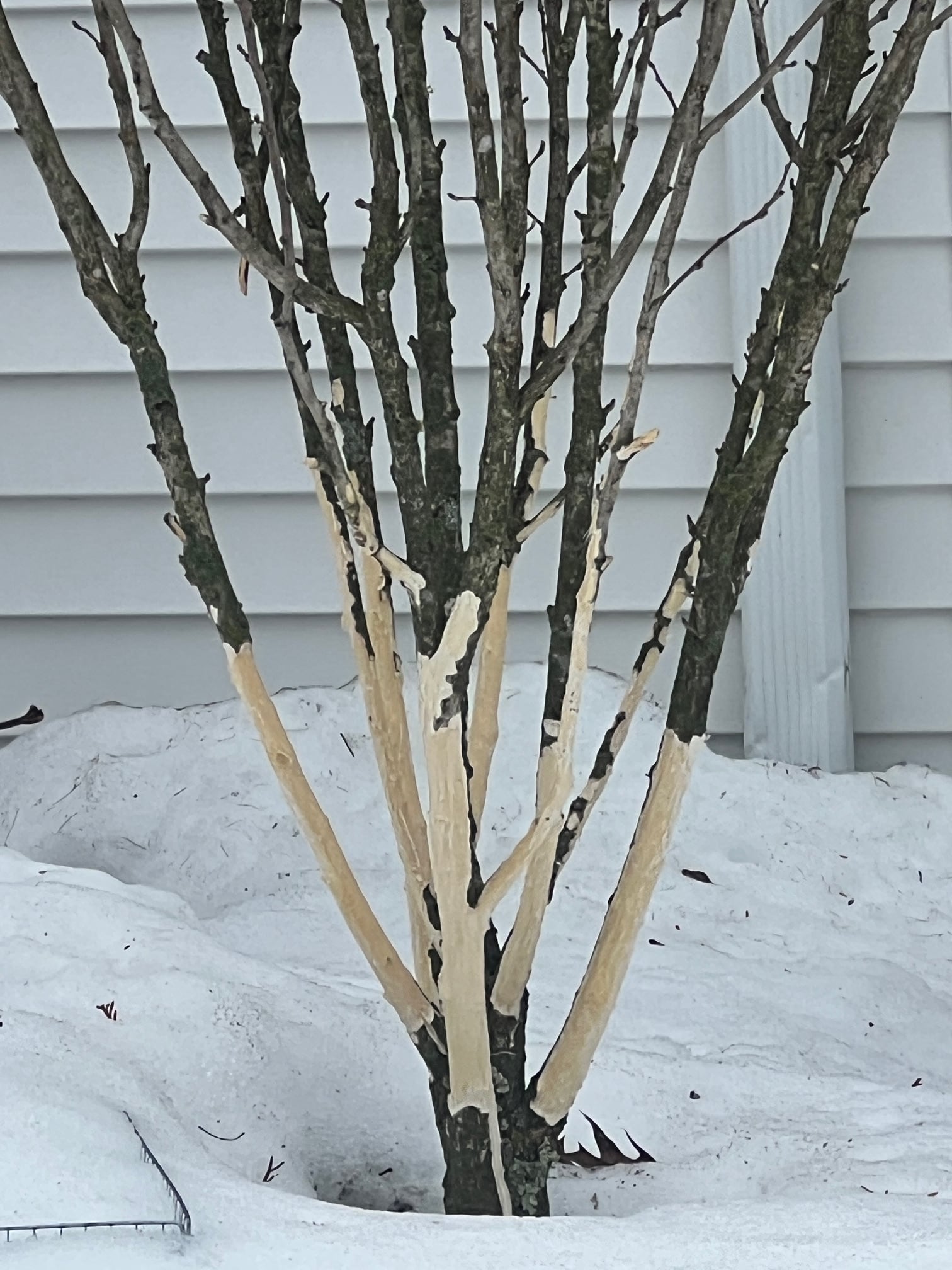
Winter snowstorms have brought a new threat to the shrubs and small trees in our backyard. They appear to have covered the rabbits’ food sources, which then shifted to the thin bark found on the lower parts of shrubs and small trees. Check out the photo I took today of the Pink Rose of Sharon. I’m afraid she won’t survive.
I have two questions: Before the snow comes, how can such plants be protected so that rabbits cannot attack the bark? Are there types of plants available that rabbits do not eat? For example, I learned the hard way that rabbits like to eat tulips, not daffodils.
Neighbors faced similar problems. There is an audience for your informed opinions.
Bell, Waltham
When rabbits strip bark from trees and small shrubs, they disrupt the connective tissues that transport water, sugars and minerals from the soil to the rest of the plant. If the damage is complete around the entire trunk, the rabbits have surrounded the plant.
The only solution requires patience and time. You can rejuvenate the shrub by pruning just below the damaged parts, ideally above a bud or node if one is visible. For established shrubs, recovery will take years. For single-trunk trees, harsh regenerative pruning will result in a multi-stemmed plant, which may cause structural problems as the tree matures.
In the words of Benjamin Franklin: “An ounce of prevention is worth a pound of cure.” To prevent future rabbit damage, gardeners either install small fabric or chicken wire fences around vulnerable plants before winter arrives. Remember that rabbits are lightweight and can travel over snow, so with accumulations like this winter, the fence should be at least 3 feet high.
You can also wrap the stems in loose plastic wrap or use burlap; The idea is to put a barrier of material between your plants and those sharp incisors. I do not recommend using repellent sprays because they tend to wear off and need to be reapplied periodically.
Finally, watering your young trees and shrubs deeply before frost helps them emerge in spring without the added stress of drought and be healthier, even recovering from even minor rabbit damage.
Woody plants with thick bark, thorns, or aromatic bark may deter rabbits at first, but hunger will cause them to gnaw on almost anything to survive. Even rose bushes are not immune to rabbit teeth!
Warmer weather signals the arrival of spring flowering bulbs, and I’d like to highlight two favorite bulbs, namely Snow drop And snow or Retinal iris. They are easy to plant and grow early, providing hope that spring will come soon.
snow drops (GalanthusIt is associated with hope and the transition from death to life. In Greek mythology, this transition mirrors the transition of Persephone, whose return from the underworld heralds the coming of spring. The Hardy Plant Society in the UK has a great website here Dedicated to sex and its lovers: galanthophiles, as they are called. This is one of the most exhilarating rabbit holes you can fall down.
The second favorite is the dwarf iris, which hails from the Caucasus and blooms before its leaves appear. Type (The iris is reticular) has stunning royal blue petals and sepals, and the plant reaches just 6 inches in height. Excellent breeding work has been done on this iris and many other species, resulting in many selections.
Iris ‘Katherine Hodgkins’ is a hybrid dwarf iris with pale blue petals, each with a yellow spot in the middle. I’m already looking forward to seeing them thriving in my garden in the coming weeks, and you can look forward to the bulb catalogs arriving next fall.
Ulrich Lorimer is director of horticulture at the Native Plant Trust in Framingham. Send your gardening questions, along with your name/initials and hometown, to [email protected]
Newsletter title
Our weekly digest of buying, selling and design, with expert advice and insider knowledge.