The animal kingdom is ruled by open sexual relationships. Bats, beetles, and bonobos all have multiple partners over a season or a lifetime. Barnacles and barracudas don’t even get to pick their partners, simply spewing their eggs and sperm into milky clouds underwater. But it’s much rarer to be a nonmonogamous bird. An estimated 90 percent of birds are socially monogamous, meaning they choose partners with whom they cohabitate and raise young, albeit usually without the bounds of sexual exclusivity. For many birds, monogamy just makes sense. Their tiny, naked chicks are essentially helpless, and the round-the-clock care they require is an easier job for two. The expectations for each bird parent are clear, and as such caregiving often follows a set script for each species.
The small and skittish white-faced plover is one such monogamous bird. Pairs of white-faced plovers switch off the incubation of their nests. The females sit on the nest by day, and the males take over at night. Around noon, when temperatures are hot, both parents will pitch in to cool the eggs. This simple routine clearly works, and has for thousands of years for the many white-faced plovers scuttling around the shores of eastern Asia. All of them, it seems, except for this guy.
In 2023, a male plover on an island off Zhanjiang, a port city in southern China, was living his life according to traditional plover norms. He’d found a mate, a female plover. They shacked up as plovers do, breeding and sitting on their clutch of eggs in alternating shifts. But in 2024, for reasons that remain unknown to anyone but him, he found another female plover with whom he felt an instant connection.
This might sound like cheating, an unsurprising example of yet another man stepping out on his long-term lady to find solace in the wings of another bird. But in this case, both female plovers knew about each other. Early that spring, they each laid three eggs into the same nest. All the eggs were fertilized by the one male plover, and all hatched successfully. This arrangement is akin to kitchen table polyamory, a style of relationship where everyone in the polycule hangs out together at the proverbial kitchen table.
Kitchen table poly worked well for the plovers. The male plover incubated the eggs at night, and A took over when the sun came up. B helped out too, albeit irregularly, during the daytime. Together, this trio performed excellently as parents. They attended to the nest approximately 90 percent of the day, a higher attendance than most monogamous plover couples, which average at nearly 87 percent. (By comparison, when this male was monogamous, he and A attended to their nest around 82 percent of the day.)
Later in the same breeding season, for reasons that, again, are unclear to anyone outside the polycule, the trio experimented with a new arrangement: They were no longer nesting partners. After the male mated with both partners, the first laid three infertile eggs and the second laid two fertile eggs, this time in separate nests. This time, the male floundered. He often failed to show up at both nests. His time spent cumulatively at both nests resembled the time one monogamous male spent at his one nest. In other words, he was a bit of a deadbeat. Despite the male’s struggles, neither of the two females spent any more time at her nest. The second female’s nest was particularly neglected, especially at night. At the end of the experiment, both nests failed.
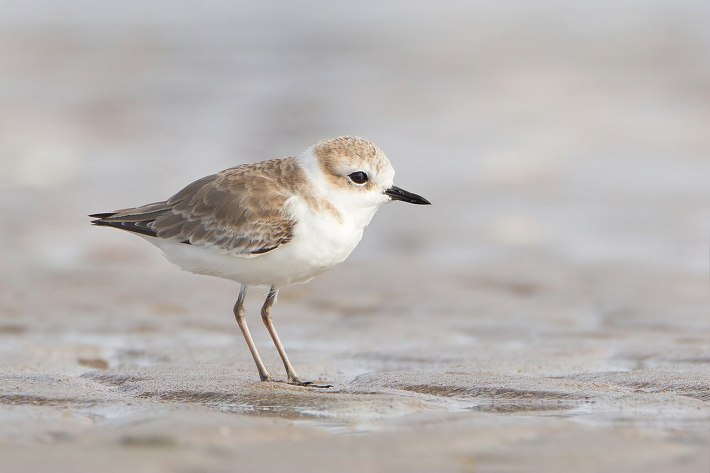
It is unclear what the male plover and his mates have learned from this experiment in relationship anarchy. The researchers speculate he may only have chosen a second mate because his first was temporarily absent. In such a scenario, it is perhaps admirable that he did his best to stick by both of them. And it is certainly a testament to both females that they tolerated each other well so well, at least in their initial shared nest. But polygyny, which in the animal kingdom refers to a male who mates with multiple females, does not appear to suit white-faced plovers. The birds are too dependent on biparental care and did not stray from their set incubation rhythms. This was likely at least part of the reason the second nest failed, the researchers suggest.
In another light, however, we might consider the male plover’s radical experiment a success. How many plovers wake up one morning and dare not just to question, but to challenge social convention? It takes courage to come out and go against the grain, to expose yourself to inevitable plover gossip. Monogamy is complicated for birds, too. Birds are always getting divorced (meaning one bird mates with a new partner while its past partner remains alive). It’s true that 90 percent of birds are socially monogamous, and it’s also true that more than 90 percent of socially monogamous birds experience bird divorce. More than 80 percent of king penguins divorce between breeding seasons, and two-thirds of piping plovers divorce after their chicks hatch. Remember that social monogamy is not sexual exclusivity, meaning most monogamous birds are functionally in open relationships. As such, white-faced plovers deserve the right to experiment with ethical nonmonogamy. Let them experience the high highs and the low lows that come with navigating bird limerence and bird compersion, bird consent and bird jealousy. Let them buy copies of Ploversecure and then abandon them on the beach.